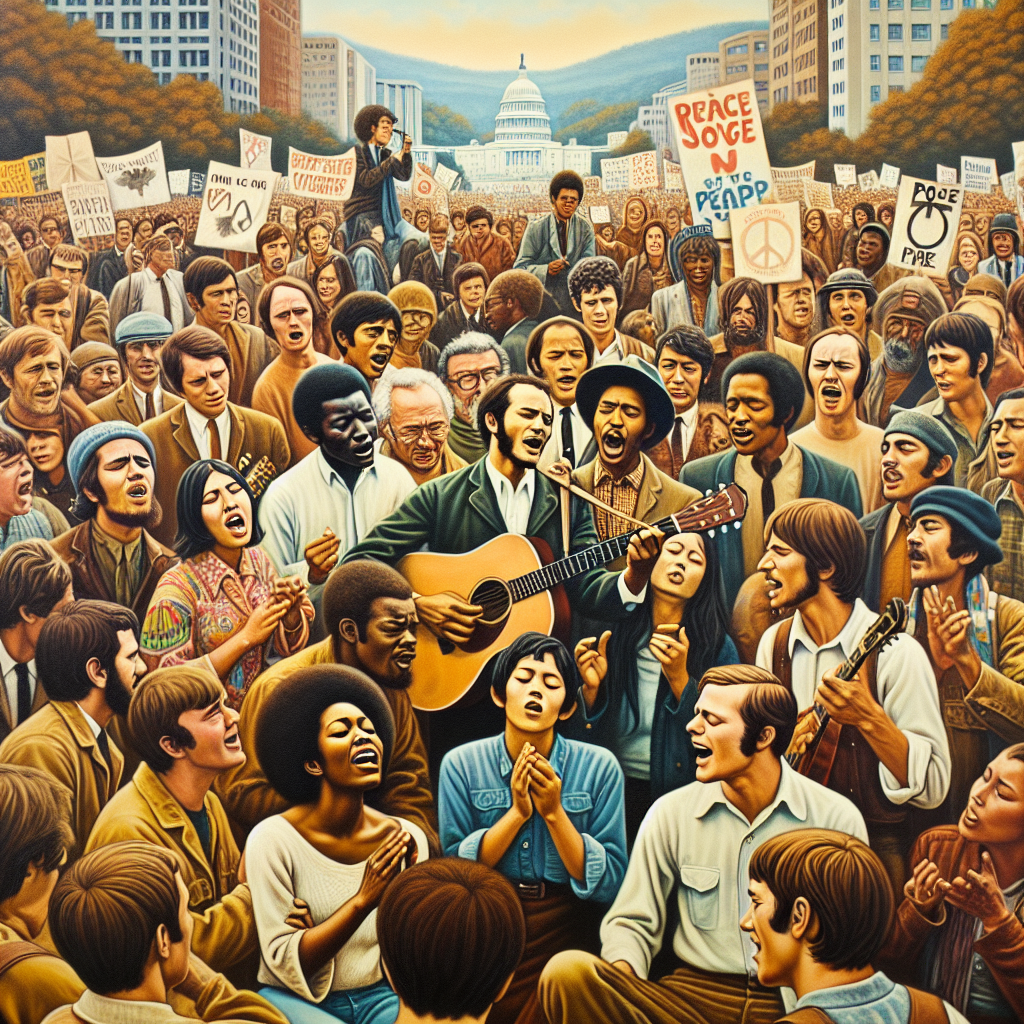
Woodstock: What did it teach us?

Woodstock, the unbelievable and never to be forgotten (that is, until some of these young people today who painfully have never heard of it) music festival held from August 15 to August 18, 1969 was more than just a gathering of half a million people on a farm in upstate New York. It became a symbol of the counterculture movement and a moment in history. Beyond the music and the free-spirited atmosphere, Woodstock left a lasting impact on society, teaching us valuable lessons about peace, love, and the power of collective action. Can it possibly be that Woodstock happened 54 years ago? Can it possibly be that Woodstock happened over half a century ago? The answer is, of course, yes. But what did this wonderful music festival teach us? Please read on and reminisce with me.

Peaceful coexistence

First and foremost, Woodstock demonstrated the potential for peaceful coexistence among diverse individuals. The festival brought together people of different races, backgrounds, and beliefs, united by a shared love for music and a desire for social change. In an era marked by social and political turbulence, Woodstock showed that a large, diverse crowd could come together without conflict. The spirit of unity that prevailed at Woodstock became a testament to the possibility of transcending societal divisions through shared experiences and common goals.

The power of music

Woodstock also taught us about the power of music as a catalyst for social change. The festival featured legendary performances by artists such as Jimi Hendrix, Janis Joplin, and The Who, who used their music to convey messages of peace and protest. The anthems of the counterculture, such as John Lennon’s “Give Peace a Chance,” resonated with the ideals of those of us who were lucky enough to have attended Woodstock and became a rallying cry for a generation seeking alternatives to the status quo. Music at Woodstock became a form of expression that inspired collective consciousness and galvanized a movement.

Significance of communal living

Moreover, Woodstock highlighted the significance of communal living and sustainability. The makeshift city that emerged on Max Yasgur’s farm for those few days was a testament to the possibility of creating a temporary utopia based on cooperation and shared resources. The organizers had to improvise to accommodate the unexpectedly large crowd, leading to a communal sharing of food, shelter, and resources. This spontaneous communal living showcased the potential for a more harmonious and sustainable way of life, challenging the individualistic ethos that dominated mainstream society.

The resilience of the human spirit

The festival also taught us about the resilience of the human spirit. Despite logistical challenges, rainstorms, and overcrowding, the overwhelming majority of attendees maintained a sense of peace and love. Acts of kindness and generosity were prevalent, and the collective goodwill prevailed over adverse circumstances. Woodstock demonstrated that even in the face of adversity, a community bound by common values and a shared vision could overcome challenges and maintain a positive and harmonious atmosphere.

A symbol of hope

In retrospect, Woodstock remains a symbol of hope and a reminder of the transformative power of collective action. It showed that societal change is possible when people come together with a shared purpose, transcending differences and embracing common values. The lessons learned at Woodstock continue to inspire subsequent generations to strive for a more inclusive, peaceful, and sustainable world.

In conclusion, Woodstock was not merely a music festival; it was a cultural phenomenon that taught us enduring lessons about unity, the power of music, communal living, and the resilience of the human spirit. As we reflect on the legacy of Woodstock, we are reminded that the ideals of peace and love, championed during those three days in 1969, are timeless and continue to resonate as aspirations for a better world.

David Crosby: A Musical Maverick and Cultural Icon

David Crosby, born on August 14, 1941, and who we sadly lost this year on January 18, 2023 is a name synonymous with the wonderful and creatively prolific landscape of 1960s and 1970s rock music. Renowned for his distinct voice, prolific songwriting, and influential contributions to iconic bands such as The Byrds and the eponymous Crosby, Stills, Nash & Young (CSNY), Crosby’s musical journey is a kaleidoscope of artistic innovation, personal struggles, and enduring legacy.

Crosby’s early career took flight with The Byrds, a band that played a pivotal role in shaping the folk-rock sound of the mid-1960s. His unique vocal timbre and keen songwriting skills were immediately apparent in hits like “Mr. Tambourine Man” and “Turn! Turn! Turn!” Crosby’s departure from The Byrds in 1967 marked the beginning of a solo career that would see him exploring uncharted musical territories.

In 1968, Crosby joined forces with Stephen Stills of the group “Buffalo Springfield” and Graham Nash of “The Hollies” to form Crosby, Stills & Nash (CSN). Their self-titled debut album, released in 1969, showcased the trio’s seamless harmonies and Crosby’s ethereal compositions, including the enduring classic “Guinnevere.” The addition of Neil Young later that year transformed the group into Crosby, Stills, Nash & Young (CSNY), creating a supergroup that resonated with the socio-political fervor of the era.

Crosby’s songwriting was marked by its introspective and socially conscious themes, reflecting the zeitgeist of the counterculture movement. Tracks like “Wooden Ships” and “Almost Cut My Hair” from the album “Déjà Vu” (1970) exemplify his ability to encapsulate the spirit of a generation grappling with war, love, and self-discovery. His lyrical depth and poetic sensibility set him apart as a songwriter capable of transcending the boundaries of traditional rock music.

Despite the creative zenith of his musical career, Crosby’s personal life was marked by turbulence. Substance abuse issues and legal troubles cast a shadow over his artistic brilliance. His struggles culminated in a prison sentence in 1985 for drug and weapon-related charges. However, adversity proved to be a catalyst for Crosby’s transformation. His time behind bars prompted a period of self-reflection, sobriety, and a renewed commitment to his art.

Crosby’s post-rehabilitation era witnessed a renaissance in his musical output. Albums like “Thousand Roads” (1993) and “Croz” (2014) showcased a seasoned artist embracing new sonic landscapes while retaining the signature essence that defined his earlier work. Crosby’s collaboration with younger artists, such as Michael League of Snarky Puppy, demonstrated his ability to adapt and remain relevant in an ever-evolving music landscape.

Beyond his musical contributions, David Crosby’s impact on the culture of the 1960s and 1970s cannot be overstated. He was not just a musician; he was a symbol of the counterculture movement, a voice that resonated with those seeking social change and artistic freedom. His advocacy for causes such as environmental conservation and social justice further solidified his status as a cultural icon with a conscience.

In conclusion, David Crosby’s journey through the annals of rock history is a tale of artistic brilliance, personal redemption, and enduring influence. From the folk-rock revival of The Byrds to the iconic harmonies of CSNY and his later solo work, Crosby’s contributions have left an indelible mark on the landscape of contemporary music. His ability to navigate the complexities of both his personal life and the ever-evolving music industry showcases a resilience that mirrors the timeless quality of his music. David Crosby is not merely a musician; he is a living testament to the transformative power of art and the enduring spirit of a true musical maverick.

I will wear purple

“Warning” A wonderful poem written in 1961 by Jenny Joseph. We should all heed this warning in our hearts.

“Warning” is a poem by Jenny Joseph that describes the speaker’s plans for her future as an old woman. The poem is divided into four stanzas, with the first being the longest. The speaker describes the things she will do when she is old, such as wearing purple clothing and a red hat, eating whatever she wants, and staying up late. The poem is humorous and playful, but it also has a serious message about the importance of living life on one’s own terms and not being constrained by societal expectations. The poem has become popular among women of all ages and is often read at birthday parties and other celebrations. There is even a “Red Hat Society” as a result of this wonderful poem.

Tomorrow is not promised to anyone, but our thoughts and feelings are our own. The final day on earth will arrive for all of us; let’s hope that before that day comes, we have had the courage to wear purple and socks that do not match and smile.

Unconventional Wisdom: Lessons We Learned from the Addams Family

The Addams Family, a fictional and eccentric household created by cartoonist Charles Addams, captivated audiences and our imaginations and our young minds (when we were young) for decades through various mediums, from cartoons to television series and films. Despite their macabre and spooky appearance, the Addams family offered a unique perspective on life, filled with valuable lessons that resonate beyond the realm of the supernatural.

One of the fundamental lessons the Addams Family imparts is the celebration of individuality and acceptance of diversity. In a world that often pressures individuals to conform to societal norms, the Addamses stand as a quirky symbol of embracing one’s true self. From Morticia’s gothic elegance to Gomez’s unabashed enthusiasm for fencing, each family member unapologetically expresses their unique interests and passions. This unyielding commitment to authenticity serves as a reminder that true happiness is found in being genuine and embracing one’s idiosyncrasies.

Furthermore, the Addams Family teaches the importance of strong family bonds and unconditional love. Despite their unusual hobbies and eccentric lifestyles, the family members share a deep love and respect for one another. The household is a sanctuary where each member can be themselves without fear of judgment. This emphasis on family values underscores the notion that a supportive and loving family can weather any storm, no matter how peculiar.

In addition to familial love, the Addams Family highlights the significance of extending compassion and empathy beyond the confines of blood relations. Despite their eerie appearance, the Addamses consistently demonstrate kindness and acceptance toward outsiders, challenging the stereotype that unconventional appearances equate to malevolence. The family extends their unique brand of hospitality to a range of characters, from the disembodied hand Thing to the hirsute Cousin “Itt”. This inclusivity sends a powerful message about embracing diversity and extending kindness to those who may seem different from ourselves.

Moreover, the Addams Family offers a humorous yet insightful critique of societal norms and materialism. In a world obsessed with wealth, status, and conventional success, the Addamses find joy in the simple pleasures of life, such as Morticia cultivating poisonous plants or Gomez reveling in his children’s peculiar talents. The family’s rejection of materialistic pursuits challenges the prevailing notion that material wealth equates to happiness. Instead, they find fulfillment in embracing the unconventional and prioritizing experiences that bring them genuine joy.

A lesson of paramount importance from the Addams Family is their resilience in the face of adversity. Despite being ostracized and misunderstood by the outside world (their neighbors), the family remains comfortably steadfast in their convictions and values. This resilience serves as an inspiration to viewers facing societal pressure to conform, thus encouraging them to persevere in their pursuit of authenticity and individuality.

In conclusion, the Addams Family, with their macabre charm and eccentricities, imparts invaluable lessons that transcend the boundaries of fiction. Through their celebration of individuality, emphasis on family bonds, practice of compassion, rejection of societal norms, and resilience in the face of adversity, the Addamses offer a refreshing perspective on life. In a world that often values conformity over uniqueness, the Addams Family stands as a beacon of unconventional wisdom, inviting us to embrace our quirks, foster meaningful connections, and find joy in the extraordinary aspects of life.

“Gilligan’s Island: A Microcosm of Social Dynamics”

Gilligan’s Island, a classic American television sitcom that aired from 1964 to 1967, has left an indelible mark on our popular culture. Created by Sherwood Schwartz, the show revolves around seven castaways stranded on a deserted island, each with a unique personality and background. While initially conceived as a lighthearted comedy, Gilligan’s Island transcended its simple premise to become a microcosm of social dynamics, exploring themes of cooperation, conflict, and the resilience of the human spirit.

The characters on Gilligan’s Island are a diverse group, ranging from the bumbling first mate, Gilligan, to the glamorous movie star, Ginger, and the affluent couple, Thurston Howell III and his wife, Lovey. The Skipper and his first mate, Gilligan, serve as the central figures of the group, attempting to keep order and guide the castaways through their daily struggles for survival. The Professor, a polymath with an extensive knowledge of science and engineering, and Mary Ann, the sweet farm girl, round out the ensemble. This eclectic mix of personalities creates a social experiment of sorts, as the characters navigate the challenges of their new island home.

One of the key themes explored in Gilligan’s Island is the idea of cooperation in the face of adversity. Despite their differences, the castaways must learn to work together to overcome the various challenges presented by their island environment. From building shelters to finding food and water, the group discovers that their survival depends on their ability to set aside personal differences and collaborate. Gilligan, despite his well-intentioned but often clumsy efforts, becomes a symbol of the group’s unity, illustrating how even the most unlikely individuals can contribute to a common goal. Take a look at this episode of “The professor builds a telephone to call someone to help them to get off the island.”

However, the island is not just a paradise of cooperation; it also serves as a crucible for interpersonal conflict. The characters’ diverse backgrounds and social statuses create tensions that manifest in comedic and often absurd ways. The contrast between the millionaire Howells and the rest of the group highlights social and economic disparities, offering a humorous commentary on class dynamics. These conflicts, while exaggerated for comedic effect, reflect real-world issues of communication and understanding, demonstrating that even in a confined space like a deserted island, the complexities of human relationships persist.

In addition to cooperation and conflict, Gilligan’s Island explores the resilience of the human spirit. Despite the challenges they face, the castaways consistently find moments of joy, creativity, and hope. The Professor’s ingenious inventions, the island’s makeshift beauty pageant, and the characters’ resourcefulness all exemplify the human capacity to adapt and find moments of joy in the most unexpected circumstances. The show suggests that, even in isolation, human connections and a positive outlook can help individuals persevere through adversity.

In conclusion, Gilligan’s Island, though remembered as a lighthearted sitcom, offers a nuanced exploration of social dynamics and the human condition. Through its diverse cast of characters, the show delves into themes of cooperation, conflict, and resilience. The island setting serves as a microcosm of society, where the characters must navigate the challenges of their circumstances and learn valuable lessons about the complexities of human relationships. Gilligan’s Island remains a timeless classic, reminding audiences of the enduring power of collaboration, the inevitability of conflict, and the indomitable spirit of the human experience.

Embracing the Beauty of Growing Older: Finding Joy in the Journey

There is a prevailing misconception in society that aging is synonymous with decline and limitation. However, as we traverse the different stages of life, it becomes apparent that growing older is a privilege, a gift that allows us to deepen our understanding of the world and ourselves. The joy of aging lies in the transformative power it holds, offering us a unique perspective that is unattainable in youth. It is a time when the soul matures and the essence of life’s true beauty begins to reveal itself in the most unexpected ways.

Experience

With each passing year, we accumulate experiences that shape us, molding our character and strengthening our resilience. The passage of time becomes a canvas upon which we paint the intricate tapestry of our lives. We learn to appreciate the simple moments that may have once seemed insignificant. The gentle touch of a loved one, the warmth of the sun on our skin, or the laughter of children playing in the distance — these are the treasures that become more precious with age.

Sense of Self-Awareness

As we grow older, we gain a profound sense of self-awareness. We become attuned to our strengths and limitations, allowing us to embrace our authentic selves without the need for validation from others. It is a time when we let go of the societal pressures to conform, and instead, we bask in the freedom of self-acceptance. We realize that the pursuit of perfection is an illusion, and that true happiness lies in embracing our imperfections and celebrating the uniqueness of our individual journeys.

Wisdom

One of the most remarkable aspects of aging is the wisdom that accompanies it. With each passing year, we gather a wealth of knowledge that cannot be acquired through textbooks or formal education. This wisdom is born from the trials and tribulations we have overcome, the mistakes we have made and the lessons we have learned along the way. It grants us the ability to navigate life’s complexities with a newfound clarity and understanding, allowing us to impart invaluable insights to those who come after us.

Relationships

Furthermore, growing older affords us the opportunity to cultivate deeper, more meaningful relationships. It is a time when we cherish the bonds we have forged over the years and invest in nurturing connections that bring joy and fulfillment to our lives. We savor the camaraderie of lifelong friends, the wisdom shared by and with mentors, and the unconditional love of family, recognizing that these relationships are the true pillars of our emotional well-being.

In the twilight of life, we come to understand that each wrinkle, each gray hair, and each passing year is a testament to the resilience of the human spirit. It is a reminder of the countless battles we have fought and the victories we have achieved. We learn to appreciate the beauty in the ebb and flow of life, understanding that every stage is an integral part of the grand tapestry of existence.

In essence, growing older is not a journey to be feared, but rather, a path to be embraced with open arms and a heart filled with gratitude. It is a testament to the richness of life and the endless possibilities that unfold with the passing of time. Let us celebrate the joy of growing older, for it is a privilege denied to many and a testament to the resilience of the human spirit.