
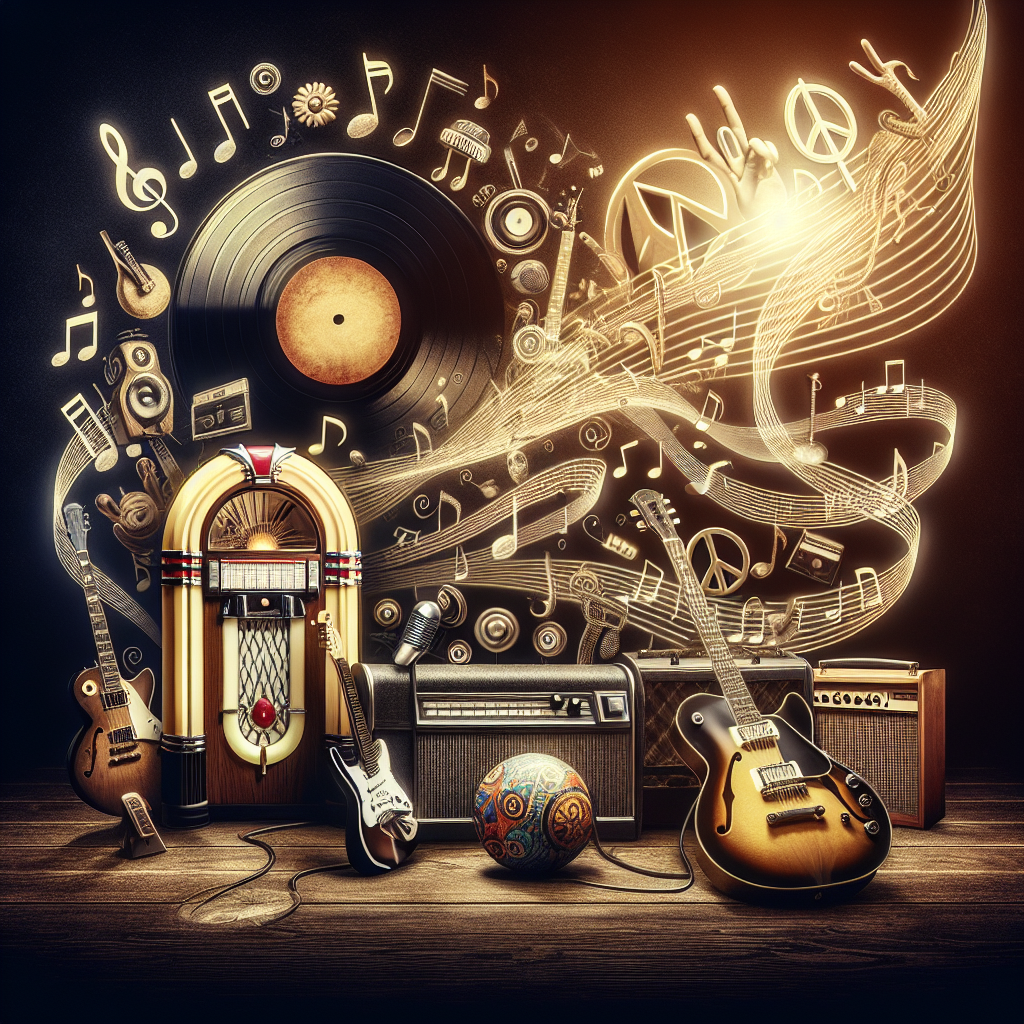
The 1960s and 1970s were a time of immense cultural change and upheaval. From the Civil Rights Movement to the Vietnam War, from the rise of feminism to the counterculture movement, these decades saw a shift in societal norms and values that would forever alter the course of history. And at the heart of it all was music.
Music has always been a powerful force for social change, and never was that more evident than in the 60s and 70s. Artists like Bob Dylan, The Beatles, Jimi Hendrix, and Joni Mitchell used their music as a platform to express their views on war, racism, sexism, and other pressing issues of the time. Their songs became anthems for a generation looking to make sense of a world in turmoil.
Politicians also recognized the power of music to rally support for their causes. Campaign rallies and protests were often accompanied by live performances from popular musicians, who helped energize crowds and spread their messages far and wide. Music became a tool for politicians to connect with voters on a deeper level, tapping into emotions that words alone could not reach.
But music wasn’t just about politics – it also played a crucial role in shaping fashion trends and technological advancements. The hippie movement of the 60s embraced psychedelic rock music and tie-dye clothing, while disco music in the 70s inspired flashy outfits and dance moves. Music videos began to emerge as a new form of artistic expression, pushing boundaries and challenging conventions.
Technological innovations also revolutionized the way we listen to music. The invention of the cassette tape made it easier than ever to share music with friends, while FM radio stations provided an alternative to traditional AM broadcasts. Vinyl records gave way to CDs, ushering in a new era of digital sound quality that would pave the way for MP3 players and streaming services.
Looking back on this tumultuous period in history, it’s clear that music played a central role in defining the cultural movements of the 60s and 70s. It served as a voice for those who felt marginalized or oppressed, bringing people together in solidarity against injustice. It inspired artists across all mediums to push boundaries and challenge conventions, paving the way for future generations to do the same.
In conclusion, the soundtrack of a generation is more than just catchy tunes – it’s a reflection of our collective hopes, fears, dreams, and aspirations. Music has always had the power to unite us in times of strife and division, reminding us that we are all connected by our shared humanity. So let’s continue to celebrate the music of the past while looking forward to what lies ahead – because as long as there is music, there will always be hope for a better tomorrow.
Get involved!
Comments