
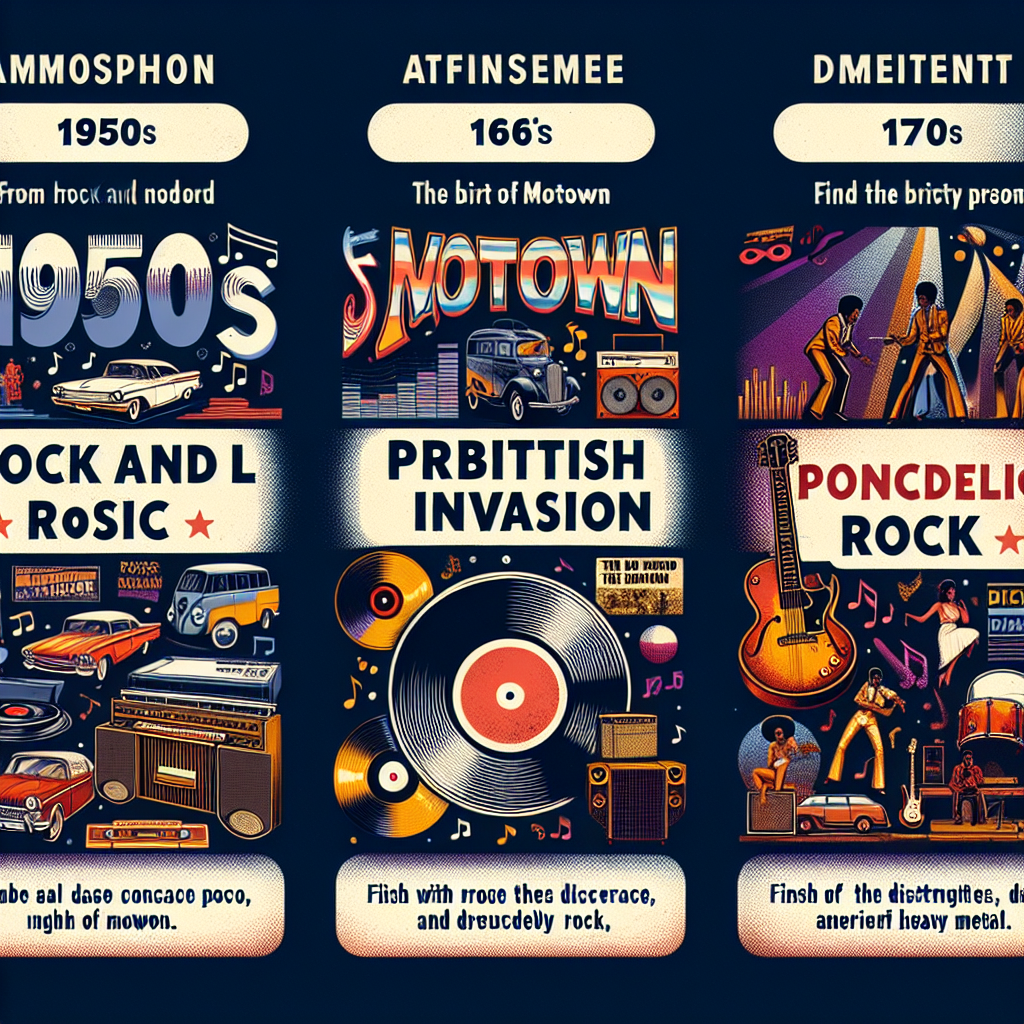
When we think of the 1950s, 1960s, and 1970s, there are a few names that immediately come to mind – the iconic artists who shaped the music scene of their respective decades. These legends not only left a lasting impact on the world of music, but also influenced culture, fashion, and even politics.
The 1950s: The Birth of Rock ‘n’ Roll
The 1950s marked the birth of rock ‘n’ roll, with artists like Elvis Presley, Chuck Berry, and Little Richard leading the way. Their energetic performances and catchy tunes captivated audiences around the world, setting the stage for what would become one of the most popular genres of music.
Elvis Presley, known as the King of Rock ‘n’ Roll, was a cultural icon who revolutionized music with his unique blend of rockabilly and rhythm and blues. His influence extended beyond music, as he became a symbol of rebellion and youth culture in America.
The 1960s: The British Invasion
The 1960s saw the rise of bands like The Beatles, The Rolling Stones, and The Who – collectively known as the British Invasion. These bands brought a fresh sound to the music scene, blending rock ‘n’ roll with elements of pop and psychedelia.
The Beatles, in particular, became global superstars with their innovative songwriting and experimental sound. Their influence on music is still felt today, as they continue to inspire generations of musicians around the world.
The 1970s: Disco Fever
The 1970s brought us disco fever with artists like Donna Summer, Bee Gees, and Gloria Gaynor dominating the charts. Disco music was characterized by its upbeat tempo and danceable rhythms, making it a staple at clubs and parties throughout the decade.
Donna Summer’s hit song “I Feel Love” is often credited with pioneering electronic dance music, while Bee Gees’ soundtrack for Saturday Night Fever became one of the best-selling albums of all time. Disco not only influenced music but also fashion trends with its flashy outfits and iconic dance moves.
Legacy Beyond Music
These iconic artists not only shaped the music scene of their respective decades but also had a profound impact on culture at large. Their influence extended to fashion trends – from Elvis Presley’s pompadour hairstyle to The Beatles’ mod suits – as well as political movements.
Music has always been a powerful tool for social change, with artists using their platform to address important issues such as civil rights and war. Bob Dylan’s protest songs became anthems for anti-war activists during the Vietnam War era while Marvin Gaye’s “What’s Going On” addressed social injustice in America.
Technology: Shaping Music Industry
Advancements in technology also played a significant role in shaping the music industry during these decades. The introduction of vinyl records in the 1950s allowed artists to reach a wider audience while cassette tapes made it easier for fans to listen to their favorite songs on-the-go in the 1970s.
In conclusion,
We owe a debt of gratitude to these iconic artists who paved the way for future generations of musicians. Their contributions to music have left an indelible mark on our culture that continues to resonate today. Let’s celebrate their legacy by keeping their timeless tunes alive for years to come!
Get involved!
Comments