
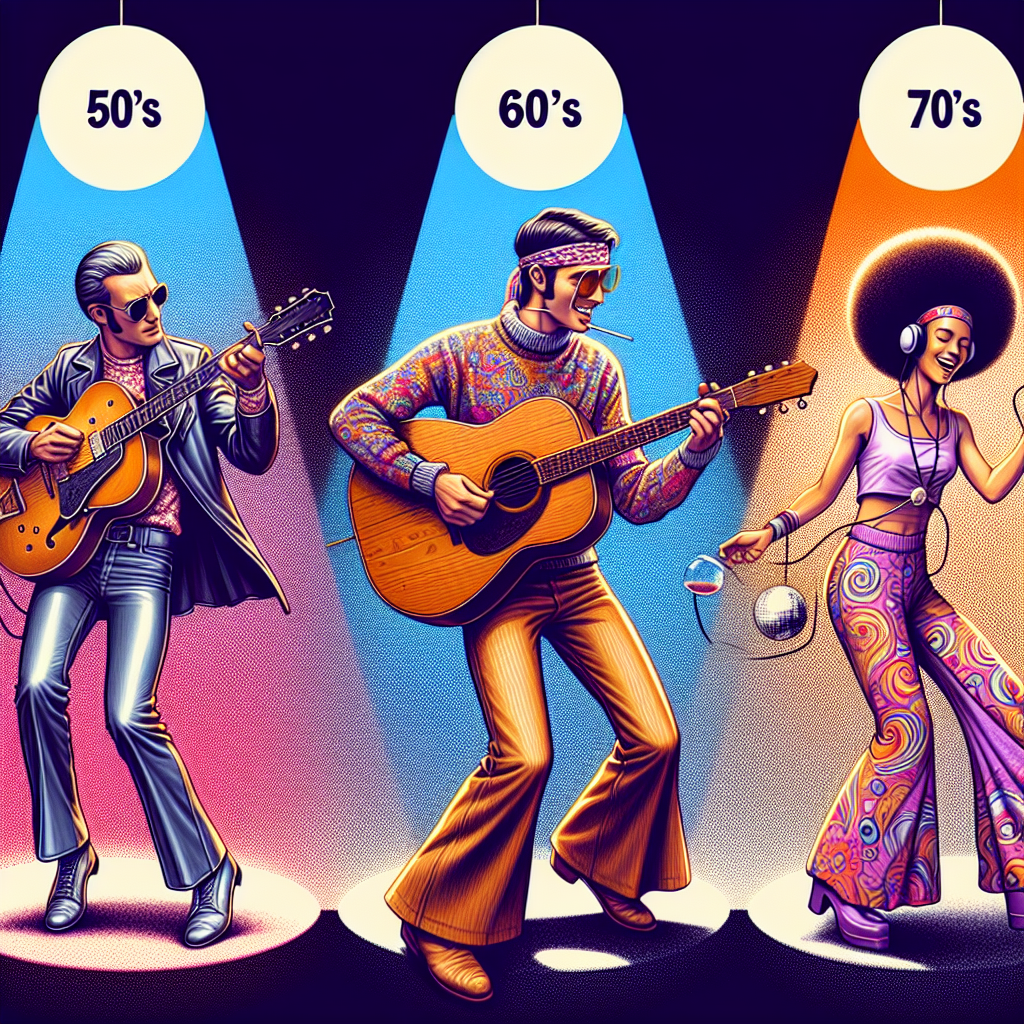
Throughout history, music has played a crucial role in shaping culture and influencing society. In the 1950s, 60s, and 70s, music became a powerful tool for expressing political views, social movements, and changing fashion trends. Revolutionary songs from this era not only provided a soundtrack to the times but also served as a voice for the people.
During the 1950s, rock and roll music emerged as a rebellious genre that challenged societal norms and values. Artists like Elvis Presley and Chuck Berry used their music to break down racial barriers and bring people together. Rock and roll became synonymous with youth culture and rebellion against authority, making it a target for politicians who saw it as a threat to traditional values.
In the 1960s, music became even more intertwined with politics as artists like Bob Dylan and Joan Baez wrote protest songs that spoke out against war, racism, and social injustice. Songs like “Blowin’ in the Wind” and “The Times They Are A-Changin'” became anthems for the civil rights movement and anti-war protests. Music festivals like Woodstock brought thousands of people together in celebration of peace, love, and unity.
The 1970s saw the rise of disco music as well as punk rock, both of which challenged mainstream culture in their own ways. Disco was all about hedonism, dancing, and self-expression while punk rock was raw, aggressive, and politically charged. Bands like The Sex Pistols and The Clash used their music to criticize politicians, question authority, and call for revolution.
Music not only influenced culture during this time but was also influenced by advancements in technology. The invention of the electric guitar revolutionized rock music while the introduction of synthesizers transformed disco into a futuristic sound. These technological innovations allowed musicians to experiment with new sounds and push boundaries creatively.
Furthermore, fashion played a significant role in shaping the culture of the 50s-70s. Musicians like Elvis Presley popularized leather jackets and pompadour hairstyles while bands like The Beatles introduced mod suits and mop-top haircuts. Hippies embraced tie-dye shirts, bell-bottom jeans, headbands, and peace signs as symbols of counterculture rebellion.
Overall, revolutionary songs from the 50s-70s had a profound impact on society by challenging norms, inspiring change, uniting people through music festivals such as Woodstock or Monterey Pop Festival (which featured performances by Jimi Hendrix), celebrating diversity through genres such as Motown or Latin jazz (e.g., Tito Puente), promoting equality through messages found within lyrics written by artists ranging from Bob Dylan to Aretha Franklin – all contributing towards creating an inclusive cultural landscape where everyone could find something they resonated with!
Get involved!
Comments